
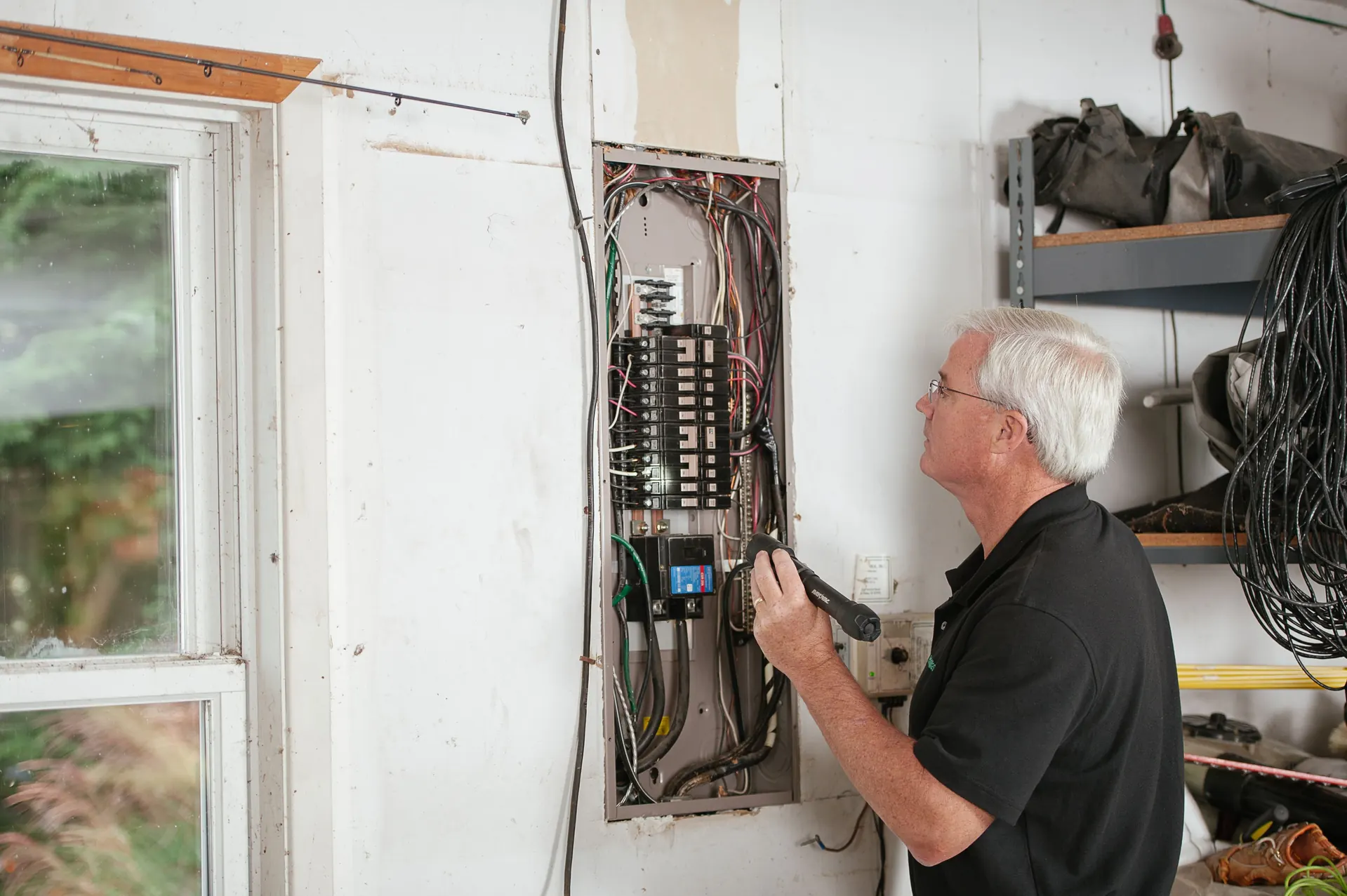
Identify the Equipment You Want to Protect
Include heating controls, appliances, home-office equipment, entertainment systems, and connected devices in the discussion. Ask how protection at the supply works alongside protection for particular equipment. A standard power strip should not be assumed to provide surge protection simply because it has several outlets.
Review the Installation as a System
The electrician should check the selected protective device against the electrical installation and manufacturer’s requirements. Ask what associated work is included and how the device will be accessible for inspection. Avoid choosing solely by a headline rating without understanding the intended installation and product documentation.
Understand the Limits and Maintenance
Request an explanation of the status indicator, replacement guidance, and what to do after a suspected surge event. Keep the model and warranty information with your electrical records. Surge protection does not supply backup power during an outage or guarantee that every electrical disturbance will be harmless.
Before You Get An Estimate
- List sensitive appliances and electronic systems.
- Ask whether point-of-use protection is also appropriate.
- Record the selected device and installation details.
- Learn how to check its status indicator.
Common Questions
Is a circuit breaker also a surge protector?
Ordinary circuit breakers and surge protective devices serve different purposes. Ask the electrician to identify what protection is actually installed rather than assuming that a panel or power strip includes surge protection.
Will surge protection keep my computer running during an outage?
No. Backup power is a separate function. If uninterrupted operation matters, discuss suitable backup equipment and how it works with the computer, network, and other devices you need to keep operating.